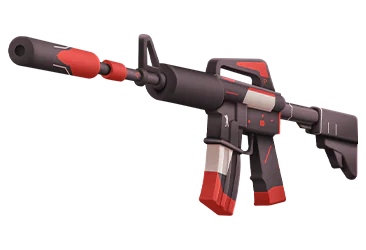


Case Overview
The case follows a concentrated probability structure typical of one-percent featured-item formats. The Cyrex outcome forms the upper tail, while the remainder of the item pool carries substantially more cumulative probability. Evaluation should therefore focus on the depth and quality of the supporting pool, including whether values are distributed gradually or concentrated near the lower boundary. Weapon category, exterior condition, supply, trading volume, and consistency of buyer demand all influence effective market value. Two cases with similar headline probabilities can have materially different statistical profiles when their secondary pools differ in liquidity and value dispersion.
Value and Risk Factors
Theoretical EV is obtained by weighting every possible item value by its probability, making the entire pool relevant to return analysis. A rare Cyrex outcome can contribute meaningfully to the average while having limited influence on the median result because it occurs infrequently. This creates variance and makes short-run observations unreliable for estimating long-run expectations. Key risk factors include the proportion of probability assigned to low-value outcomes, the distance between common and premium values, secondary-market liquidity, and demand stability. If the premium item's valuation changes, expected return can shift even without any change in case mechanics. A broader middle-value segment generally reduces distributional concentration and moderates volatility.