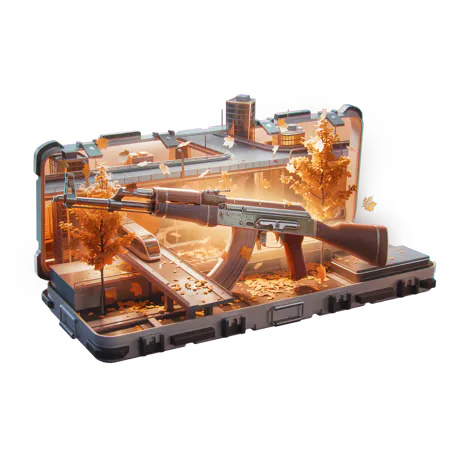



Case Overview
The case combines weapon skins with cosmetic categories such as charms. The pool spans common, mid-tier, and scarce outcomes, creating an uneven distribution rather than a narrow set of similarly valued items. Some premium variants occupy only a small share of the outcome space, while routine items account for most results. This places Crimson Fall in a high-dispersion format where upper-tier items can differ substantially from the typical outcome. The structure should therefore be assessed through the complete item pool and probability allocation rather than through the most valuable entries alone.
Value and Risk Factors
Expected value depends on the probability-weighted market value of every possible outcome, not on the highest-value skin in the pool. A case can contain expensive items while still producing a lower average return when those outcomes represent only a limited part of the probability distribution. Variance is a central factor: concentrated lower-tier probabilities increase the frequency of below-average results, while scarce upper-tier items widen the range of possible outcomes. Market liquidity also influences practical value. Weapon popularity, exterior condition, available supply, trading volume, and demand stability can change secondary-market valuations over time, affecting expected return even when case probabilities remain unchanged. Crimson Fall should therefore be evaluated through probability distribution, item-pool quality, variance, liquidity, and the stability of market demand.