
CS2 Case Opening Mistakes Beginners Should Avoid
Published: 31.05.2026
CS2 case opening can be entertaining, but it is also easy to misunderstand. Many beginners focus on rare knives, gloves, or expensive weapon skins while ignoring the case odds behind them. This often leads to poor decisions, especially when users do not check drop chance, expected value, bonus terms, withdrawal rules, or real market price.
The most common CS2 case opening mistakes usually come from treating random outcomes as predictable. A case preview may show valuable skins, but that does not mean those skins are likely to drop or that case has strong value. This guide explains the beginner mistakes to avoid and how to approach CS2 case opening more carefully, using basic research, budget rules, and skin value checks instead of hype or emotional spending.
Why Beginners Make Mistakes With CS2 Case Opening
New users often judge a case by its most expensive item. That can be misleading because the rarest item usually has the lowest drop chance, while most outcomes may be lower-value skins.
Beginners may also skip case odds, ignore the full item pool, or forget to compare rewards with current market price. Some trust influencer videos, paid promotions, or generic reviews without checking whether withdrawals, fees, and bonus terms are clear.
Another common issue is emotional opening. After several bad drops, some users deposit more or open more cases to recover losses. Case opening should not be treated as a profit method or investment plan. It is risk-based entertainment with uncertain results.
CS2 Case Opening Mistakes Beginners Should Avoid
The following checklist explains common CS2 case opening mistakes that can lead to emotional spending, weak research, or misunderstanding case value. Each mistake is avoidable if users slow down and review the data before opening.
Mistake #1: Ignoring Case Odds
Сase odds show the probability of receiving each item or category. They help users understand drop chance before spending money or skins.
Rare skins usually have lower probabilities than common rewards. A case can display an expensive item, but that item may be unlikely to appear. Users should review the full item pool, including lower-value outcomes.
Hidden, vague, or unclear odds are a red flag. Without odds, it is difficult to judge risk, expected value, or whether a case is presented fairly.
Mistake #2: Choosing a Case Only for the Most Expensive Skin
A headline reward can make a case look attractive, but one expensive skin does not define the whole case. Many openings may result in lower-value items.
Promotional visuals often highlight the best possible drop. Beginners should look past the image and ask what most outcomes are worth. The full item pool matters more than the most expensive item.
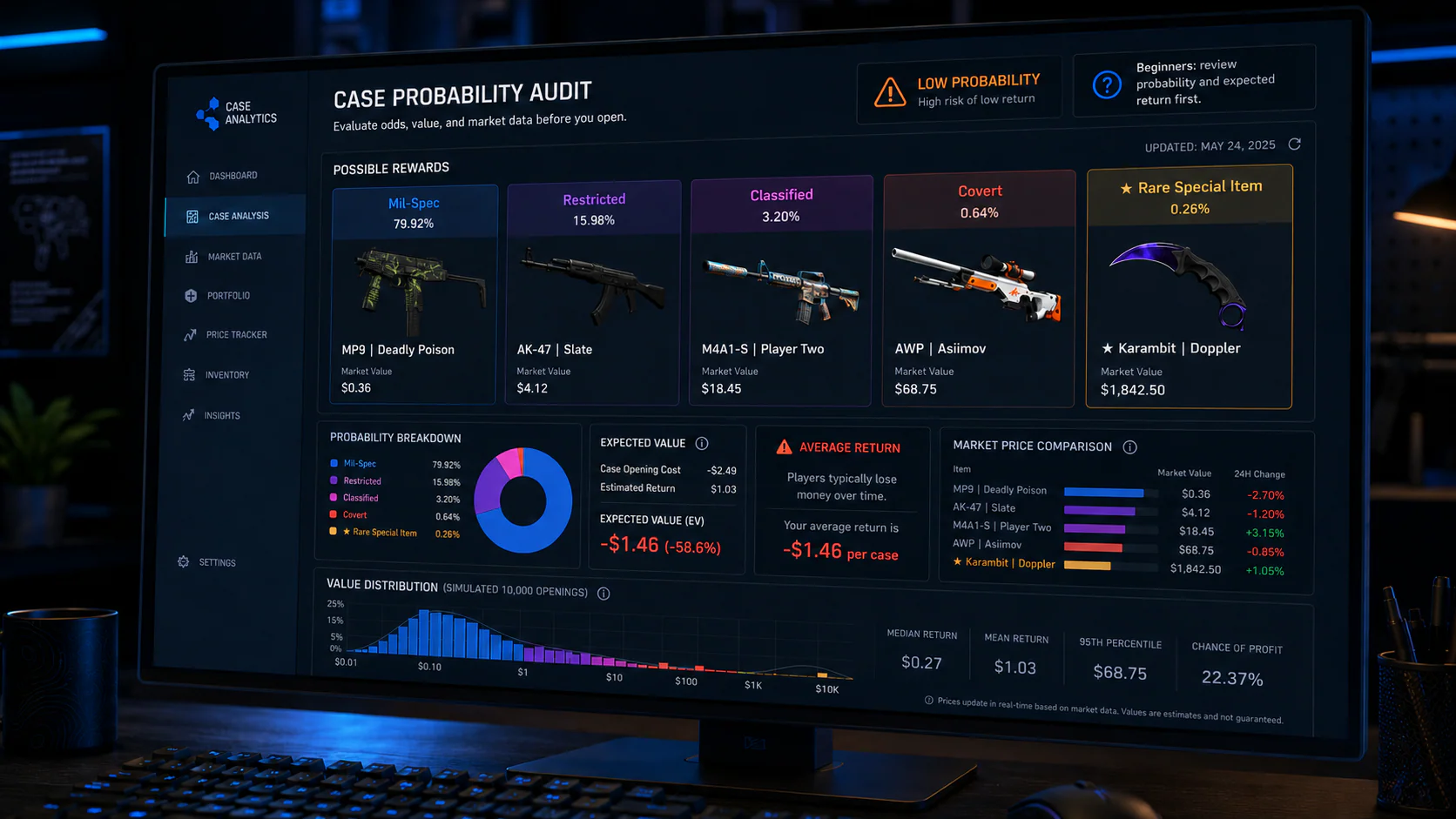
Mistake #3: Not Understanding Expected Value
Expected value, or EV, is a theoretical average return based on case price, item market prices, and drop probabilities. It can help compare cases, but it does not predict a single opening.
A case may have an EV ratio that looks useful for analysis, but random results can still vary heavily. Negative EV is common in case opening, meaning the average theoretical return may be lower than the case cost.
EV should be used for comparison and education, not as a profit promise.
Mistake #4: Chasing Losses After Bad Results
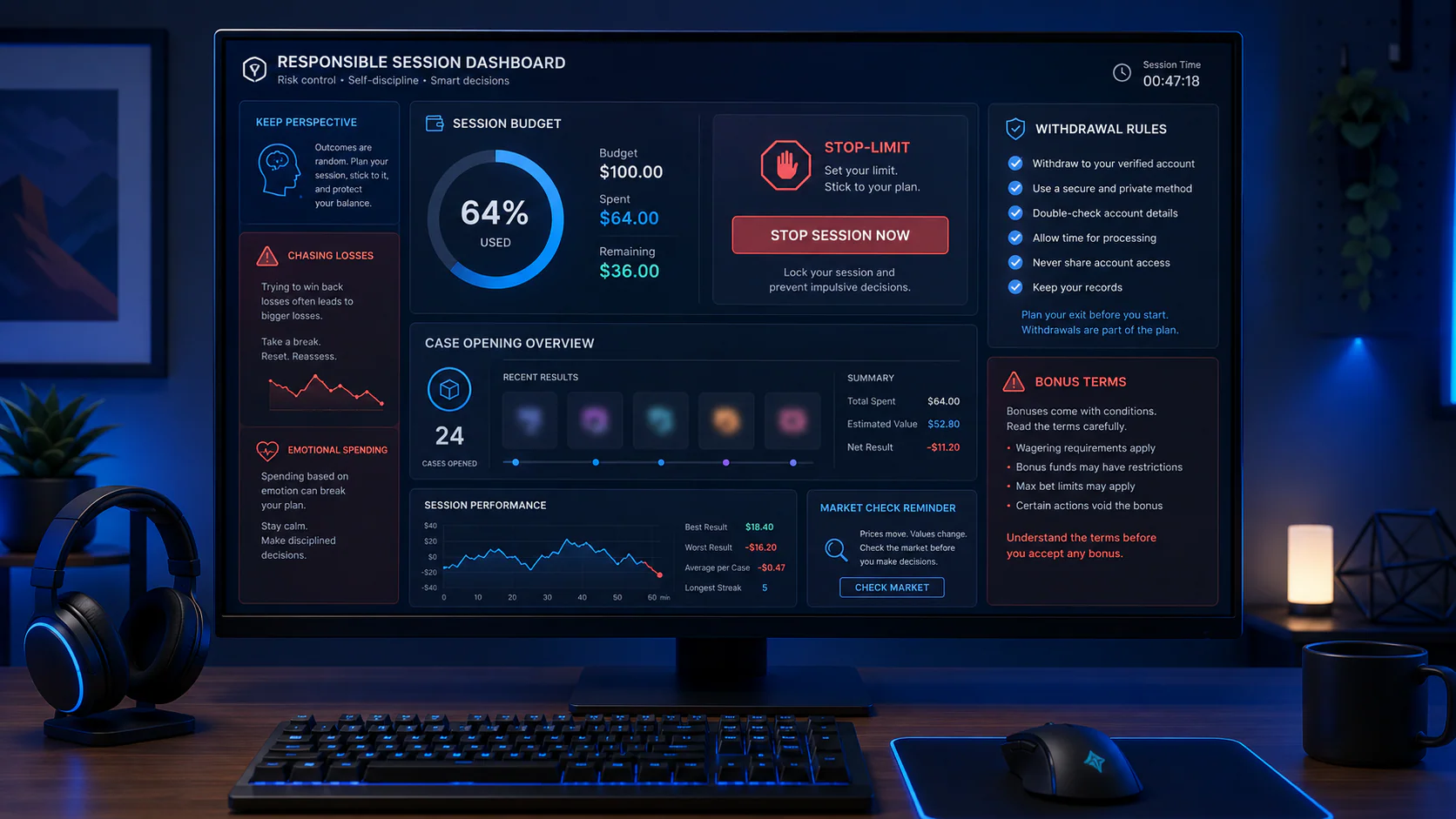
Chasing losses means opening more cases to recover previous losses. This is risky because past results do not improve future drop chances.
If a user receives several poor outcomes, the next opening is not more likely to produce a rare skin because of that history. This is where emotional spending and the sunk cost fallacy become dangerous.
A better rule is simple: stop when the session limit is reached.
Mistake #5: Opening Without a Budget
Beginners should set a fixed entertainment budget before opening cases. This amount should be money or skin value they can afford to lose without affecting important expenses.
A useful budget includes a session limit and a rule against extra deposits after losses. Tracking spending also helps users see how quickly small openings add up.
Bankroll and risk control are not complex ideas here. They mean deciding the limit in advance and following it when emotions rise.
Mistake #6: Accepting Bonuses Without Reading the Terms
Bonuses can look helpful, but they may include conditions. Deposit matches, free case offers, or promotional rewards can come with wagering requirements, locked balances, time limits, or withdrawal restrictions.
A large bonus is not always a better deal. If the rules are unclear or difficult to complete, the promotion may create more problems than value.
Users should read all bonus terms before accepting any offer.
Mistake #7: Ignoring Withdrawal Rules
Withdrawal rules should be checked before depositing. Important details include minimum withdrawal limits, available skins, withdrawal fees, processing delays, KYC requirements, locked balances, and bonus-related restrictions.
A site may allow quick deposits but have slow or limited withdrawals. If withdrawal rules are vague, hidden, or inconsistent with user reviews, beginners should be cautious.
Mistake #8: Not Comparing Skin Market Price
A skin can look valuable in a case preview, but its real value depends on market context. Users should compare possible rewards with market price, condition, rarity, StatTrak status, stickers, supply, and demand.
Two versions of the same skin can have different prices. Before opening, compare the case price with possible reward values across the full item pool.
Mistake #9: Ignoring Float Value and Wear Levels
Float value and wear level affect CS2 skin value. Common wear levels include Factory New, Minimal Wear, Field-Tested, Well-Worn, and Battle-Scarred.
A Factory New skin may be more desirable than a Battle-Scarred version of the same skin. Lower float versions can also attract more demand, depending on the item.
Beginners should not assume every version of a skin has the same market value.
Mistake #10: Trusting Reviews or Influencer Hype Too Quickly
Influencer videos, professional design, and positive reviews do not prove a platform is trustworthy. Some promotions are paid, and some creators may receive affiliate rewards.
Fake reviews often use repeated generic praise and avoid specific details about withdrawals, support, or case odds. Recent feedback is usually more useful than old comments.
Users should compare multiple sources and look for withdrawal complaints, unclear ownership, or repeated scam alerts.
Mistake #11: Trying to Get One Exact Skin Through Cases
If a user wants one exact skin, buying skins directly is usually more predictable. Case opening depends on random outcomes, and the target item may have a low drop chance.
Opening cases to get one specific item can cost more than the skin itself. Direct buying lets users choose the exact skin, wear level, float value, StatTrak status, and price.
Mistake #12: Treating Case Opening as an Investment Strategy
CS2 case opening should not be treated as reliable investing. Outcomes are random, rare drops are not predictable, and skin prices can change.
Market value depends on demand, supply, updates, and broader CS2 trends. Negative EV is also common. Case opening is better viewed as entertainment with risk, not a plan for income.
How to Avoid These Mistakes
Check case odds before opening.
Review the full item pool.
Compare case price with possible skin values.
Understand expected value before relying on it.
Set a fixed budget.
Do not chase losses.
Read bonus terms before accepting offers.
Check withdrawal rules before depositing.
Compare market prices, float value, and wear levels.
Be careful with fake reviews and influencer hype.
Buy directly if you want one exact skin.
Treat case opening as risk-based entertainment, not income.
How Chance4Skin Can Help
Chance4Skin helps users explore CS2 skins, check skin data, compare case odds, understand drop chance, and review market context before opening cases or buying skins.
As a CS2 skin analytics and wiki-style platform, Chance4Skin can help beginners think more clearly about expected value, EV ratio, case comparison, skin value, float value, wear level, and risk-related information.
Users can also read: CS2 Case Opening Strategy: Bankroll, EV Ratio and Risk Control for Beginners.
Chance4Skin does not remove risk or make outcomes predictable. It supports better research so users can avoid common CS2 case opening mistakes and make more informed choices.
FAQ
What is the biggest mistake beginners make in CS2 case opening?
One of the biggest mistakes is opening without checking odds, item pools, and expected value. Many beginners focus only on rare skins and ignore the probability of lower-value drops.
Why should I check case odds before opening?
Case odds show the probability of receiving each item. Without checking odds, users cannot properly understand drop chance, risk, or expected value.
Is chasing losses in CS2 case opening a bad idea?
Yes. Chasing losses is risky because past outcomes do not improve future drop chances. Opening more cases to recover losses can lead to emotional spending.
Should beginners use a budget for CS2 case opening?
Beginners should set a fixed entertainment budget before opening cases. They should avoid extra deposits after losses and only spend what they can afford to lose.
Are CS2 case bonuses always worth it?
No. Bonuses may include wagering requirements, withdrawal restrictions, locked balances, or time limits. Users should read the full terms before accepting any bonus.
Is buying CS2 skins directly better than opening cases?
Buying directly is usually more predictable if the user wants one specific skin. Case opening depends on random outcomes and may cost more than the target item.
Does float value matter when opening CS2 cases?
Yes. Float value can affect the visual condition and market value of a skin. Two skins with the same name can have different prices depending on wear level, StatTrak, and demand.
Can Chance4Skin help beginners avoid CS2 case opening mistakes?
Chance4Skin can help users understand CS2 skins, case odds, drop chances, market context, and EV-related data. It supports better research, but users still need to manage risk carefully.
Written by
Team Chance4Skin


